
Follow us:


TALKS & READINGS
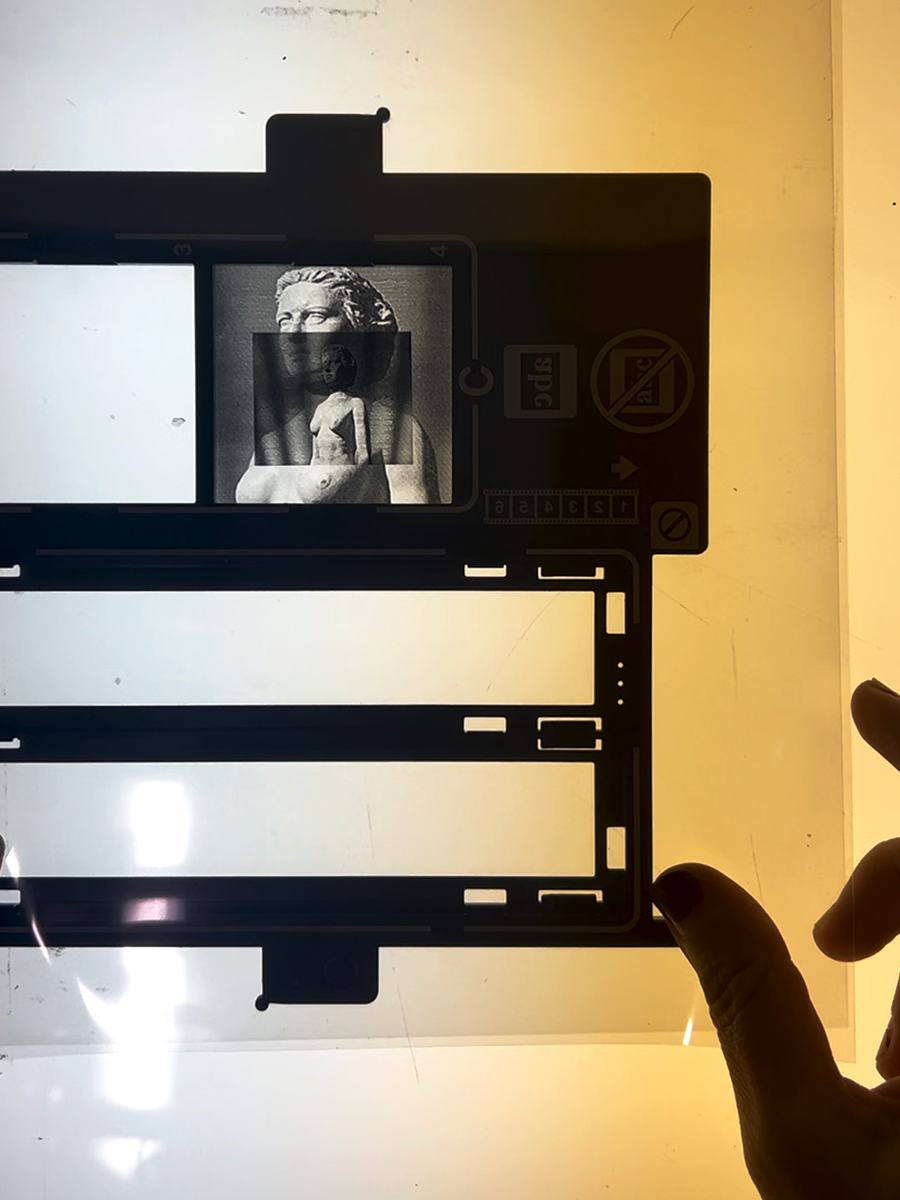
GIVING HISTORY A SECOND CHANCE.
Ruth Estévez
18 APR - 18 APR, 2026
Saturday, April 18, 3:30pm
Often when we speak about archives, we think of them as static monuments, rather than something growing, shifting, dynamic. Because these artifacts are not still. They are full of movement.
What does it mean to approach the archive not as something fixed, but as something alive? Not as a container of truth, but as a field of potential?
In this conversation, visiting curator Ruth Estévez will speak about her own curatorial and artistic practice alongside the work of others—thinking through how to perform with documents: historical, personal, invented, even erased, thus shifting the document from being an endpoint into something more like a score—a script that can be reactivated, reinterpreted, embodied, even contradicted.
How do we transmit ideas, knowledge, movement—but also trauma, secrecy, absence—without falling into the trap of simply preserving them? What would it mean to actually give them life?
And this has implications for institutions. Could museums become spaces not only of preservation, but of activation? Could exhibitions function as evolving performances rather than fixed displays? Could art schools approach history as something to be inhabited, questioned, reimagined, rather than simply learned?
What would it mean to develop methodologies that allow alternative narratives to emerge—not only through representation, but through embodiment and storytelling?
So the question becomes: is performance a way of giving history a second life? Or perhaps, a second chance?
Ruth Estévez
Ruth Estévez is a curator, writer, and artist whose practice engages institutional archives and historical research, interweaving them with personal perspectives and interdisciplinary narratives. Her work is particularly concerned with how power is constructed and represented, especially through language and gesture.
She is currently co-director of the Skowhegan School of Painting and Sculpture in New York and Maine, and serves as faculty at the School of Visual Arts (SVA) in New York and the Maryland Institute College of Art (MICA) in Baltimore.